

How We’re Working with Indigenous Communities: Felicia’s Story
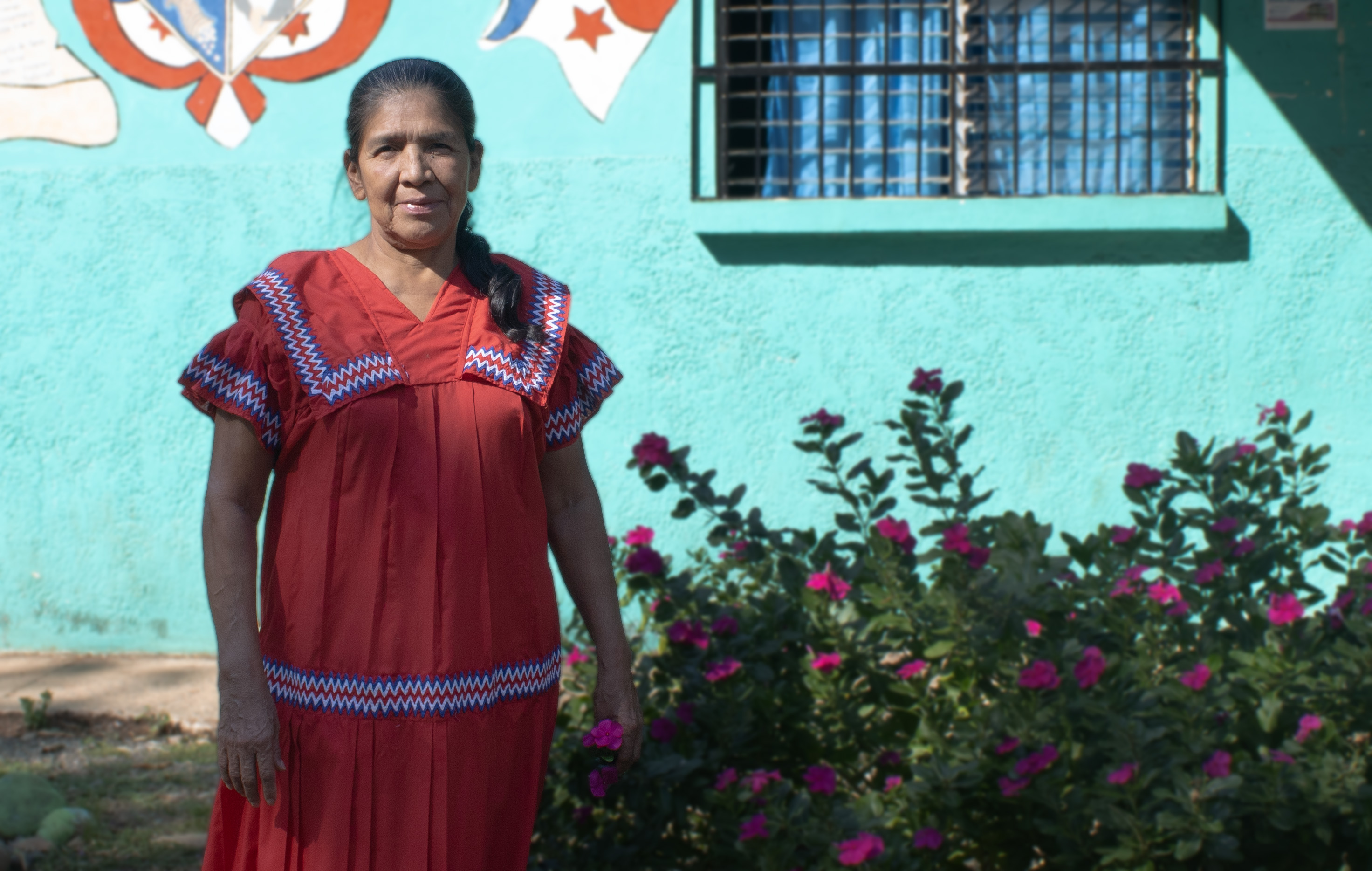
Photo by RET.
Article by Sophia Robson, Disaster Risk Reduction Specialist for RET
NGÄBE-BUGLÉ, PANAMA – With an expansive coastline along the Caribbean, the Ngäbe-Buglé region of Panama is at high risk for a plethora of natural events including coastal flooding and landslides, extreme heat and wildfires and even earthquakes and volcanic activity from Mount Baru. The Indigenous communities have learned to navigate these occurrences, but their frequency and scale is quickly changing.
Felicia Gallego is the mayor of the Besikó district in Ngäbe-Buglé. Born and raised there, her first language is Ngäbere, just like many people in the community, and Ngäbere traditions and culture are still very much alive. Felicia says that the situation regarding risk and disasters in her community has changed significantly, “now, Comprehensive Disaster Risk Management (CDRM) is a concept that the community understands, whereas previously it was unknown.”
“The project has helped us acquire new capacities and tools, through training and workshops in the community and with the new knowledge and tools.”
RET has been working in the community since 2020, with financial support from USAID-BHA, with the goal of increasing local capacities in disaster preparedness. RET spoke to Felicia at length about the current project:
“The project has helped us acquire new capacities and tools, through training and workshops in the community and with the new knowledge and tools, we have become more aware of things, and understand the value of reading risk signals at an early stage, including the use of our own traditional knowledge.”
Want to make a difference? Consider making a donation to RET today.
“The project has had a lot of respect for our culture, values and knowledge. Workshops have been conducted in the Ngäbere language, using examples from our own environment, from our daily lives, as well as documents in Ngäbere, respecting our culture, how we do things, and why we do things. The respect that has been shown has been fundamental in ensuring community support, and has created a bond of trust between the Municipality, RET and the Community that is also a partnership that will undoubtedly save lives.”
“When we first made contact with RET, it was during one of the most difficult moments we have ever faced, both as inhabitants of this district, as Panamanians, and as authorities. It was during Hurricane Eta, just as the country was receiving reports of fewer COVID-19 cases, putting us in a vulnerable situation, especially because we had never been prepared for events of this magnitude.”
“So, having RET come to provide us with assistance, then educating us along with the community with measures to prevent risks, in my experience, was and is a great ally. Thanks to RET, in a second situation where the Soloy River overflowed, we were able to respond to the population immediately, safeguarding their integrity and providing assistance from the municipality. On this occasion, we were already prepared and had RET to accompany us in a time of crisis.”
“I can say that knowledge, respect for the particularities of our environment, is the best tool that RET has given us, both to municipal officials and to the population in general. Knowledge is power, and with that power, a lot of change can be achieved, thus avoiding any situation to regret.”
“As mayor, convincing the honorable representatives of the districts that this was a beneficial project for the population was one of my greatest challenges, once I understood the benefits of the project presented by RET. Being a woman, the barrier was even greater.”
“The biggest change I have undergone is in perspective; now we not only think about solutions after a disaster but also, in advance, we are thinking about what actions to take if a disaster were to occur in our community. We are prepared. We are not at the mercy of waiting for something to happen first, then evaluating it, and only then seeking an alternative. And this has helped me make decisions in my municipal work as well as in my personal life as the head of my family.”
“Today, RET is not seen as an outsider organization, like many we have seen come and go. The community, upon seeing the RET logo, sees it as a community ally, not as a stranger, but as someone truly here to provide assistance and educate us. Similarly, through the work they have done in schools, with youth, women, and civil society in general, they have managed to raise awareness in each of them. The involvement of volunteers and youth has further strengthened the sustainability of these changes, helping future generations to face new threats. Today, we see prevention as a necessity, not an imposition. I consider this to be the most important value that has changed: RET has made us trust and gives us confidence.”
“As mayor, convincing the honorable representatives of the districts that this was a beneficial project for the population was one of my greatest challenges, once I understood the benefits of the project presented by RET. Being a woman, the barrier was even greater; initially I had no experience in administration. But the project helped clarify that disaster prevention matters, one should not consider the gender or skin color or other characteristics. If the methods proved effective in other regions and towns, it stands to reason that the insights and expertise could be applicable here, especially considering our lack of a disaster management strategy leaving us vulnerable to a range of hazards.
“Creating a collective awareness of why not to expose oneself to a situation that represents an imminent risk, but above all, understanding exactly what a risk is, is crucial. Many people are faced with a risky situation but because they do not know that it is indeed a risk, they do not take preventive measures. Once again, I insist that knowledge is the greatest tool that this project has given us. By knowing, we become more aware, and this is fundamental when making a decision that could save lives.
“Once those who live in the communities have been involved: political authorities, traditional authorities, guilds, educators, students, institutions, and the community in general, it has ensured that future actions are planned so that the projects carried out include risk prevention as part of their strategy. But undoubtedly, RET’s technical support will be essential in every municipal administrative area. The community has been left with the tool that will prevent tragedies in times of risk: knowledge.
“Before [Hurricane] Eta and the arrival of RET in Besikó, talking about CDRM was simply a word to adorn any official or non-official document; today, talking about CDRM means talking about saving lives, both ours and those of our loved ones who live and coexist with us. The change in this mindset is a value that has placed the community as the main guarantor that everything is done with prevention in mind. There is still a long way to go, yes, but there has been a noticeable change in the thinking and feeling of the population.”
To help us continue this critical work in Panama and around the world, donate to RET today.