

A Tale of Resilience: Adam Bello and the Revival of Fish Farming in Sayam Refugee Camp

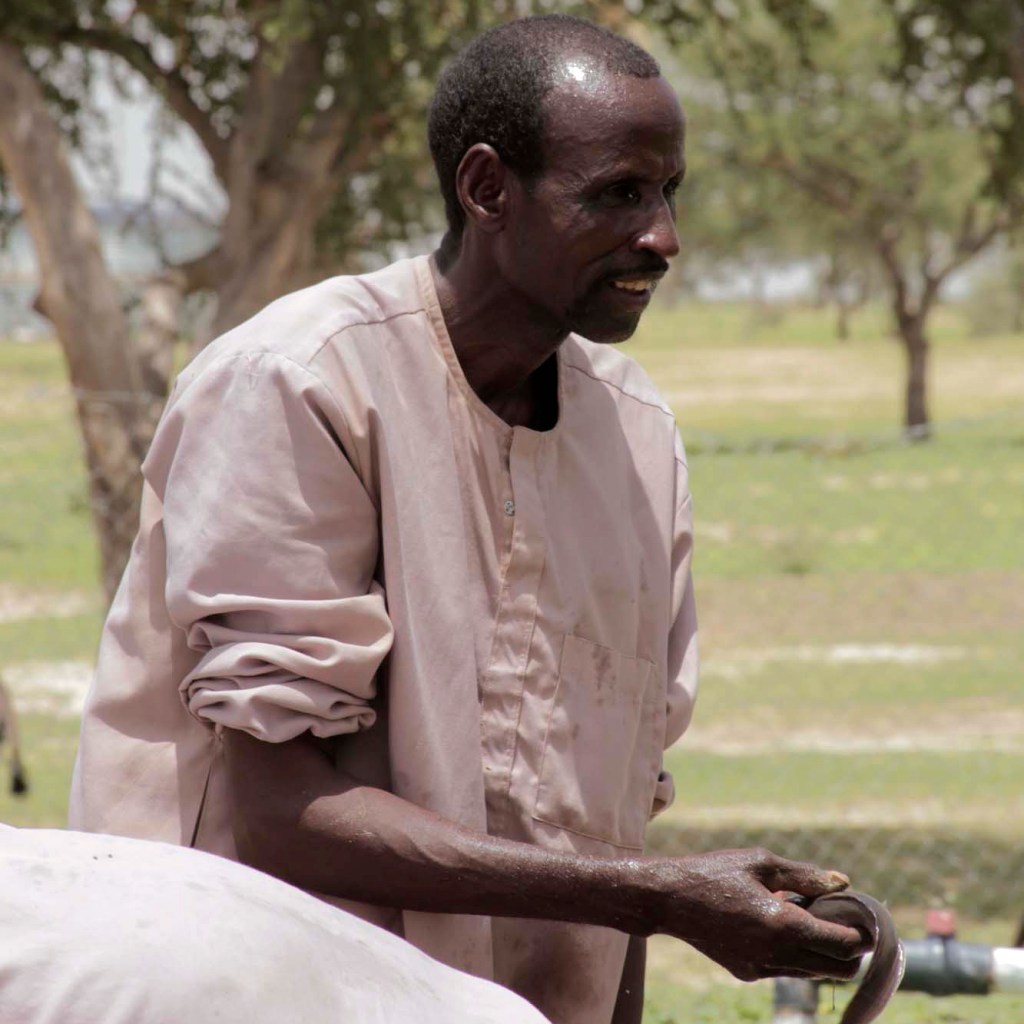
“RET gave everyone who wanted to practice fish farming a chance to join.”
Photo by RET
Article by Jean Baptiste Gihugu, Project Communications Officer (EMEAA) for RET
SAYAM CAMP, NIGER – Adam Bello, a soft-spoken 60-year-old, has called the Sayam camp in Niger home since 2015. With a household of eleven—comprising three men and eight women—he carries not just the weight of his own family but also the hopes of a community. As the head of the “Himma” agricultural group and a key figure in the camp’s fish farming initiative, Adam’s journey is a testament to resilience and perseverance.
“I remember when we first started,” Adam begins, his eyes reflecting the challenges and triumphs of the past years. The UNHCR had generously provided 52 fishponds in 2017, a symbol of hope and a fresh start. However, as time went by, the number of functional ponds dwindled to 28. The initial excitement faded, and the burden of maintaining the ponds often fell on Adam’s shoulders. “At the beginning, the members were not actively involved in managing the site,” he recalls. This left Adam feeling isolated, as he struggled to keep the project afloat. The community’s frustration grew, with many questioning the distribution of the project’s benefits.
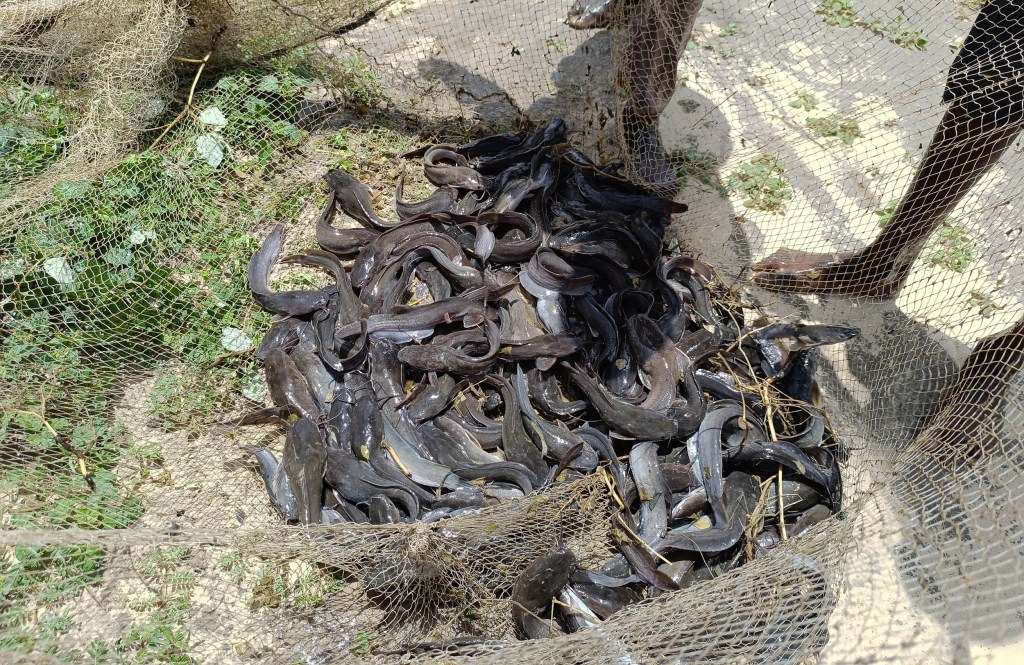
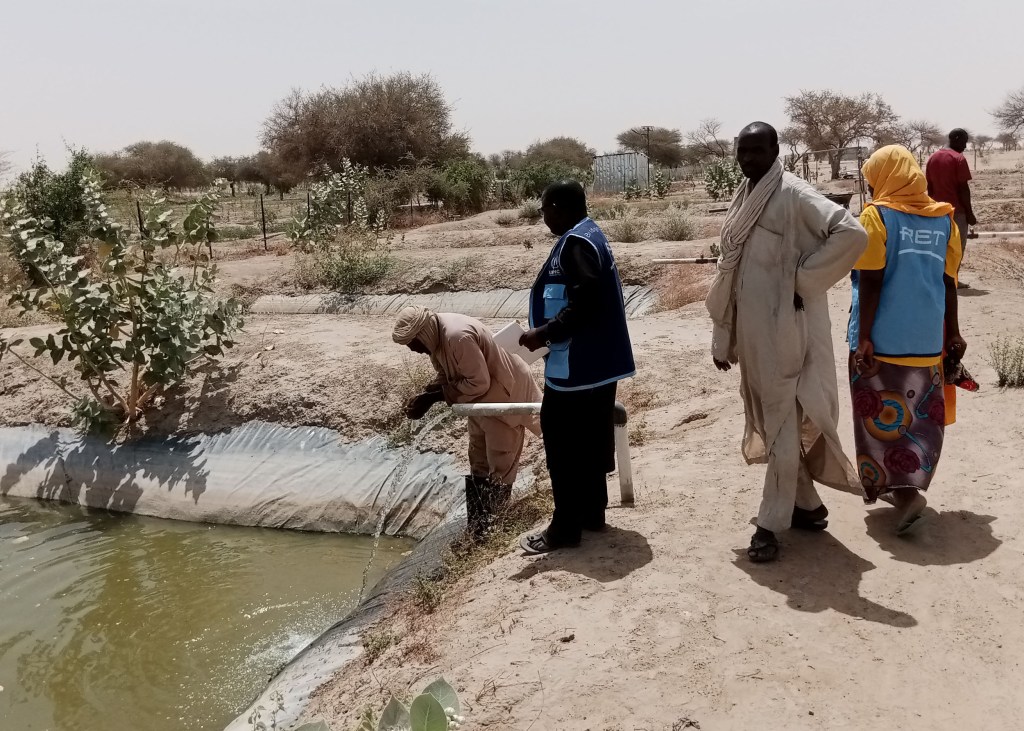
Photos by RET
In 2023, a ray of hope arrived with RET’s evaluation of the fish farming activities. They found several issues: low participation from beneficiaries, fuel shortages for pumping water, frequent equipment failures, and a general lack of organization and accountability. Rather than giving up, the community, guided by RET, chose to rebuild and reorganize. “RET gave everyone who wanted to practice fish farming a chance to join,” Adam explains, a hint of relief in his voice. “They dissolved the old committee and established seven new groups, each responsible for its own set of ponds.”
The reorganization proved effective. The faulty equipment was repaired, and fish feed production became consistent. Feeding the fish, once a solitary task for Adam, became a collective effort. RET played a crucial role, rehabilitating the non-functional ponds and restocking them with over 8,000 carp and catfish fingerlings. But it wasn’t just about resources; it was about knowledge. “Before, we fed the fish haphazardly, without any basis, not even knowing the number of fish. But now, thanks to the training, we can assess the daily needs of the fish,” Adam shares, smiling at the thought of their newfound efficiency.
Adam’s story is not just about fish farming. It’s about a community’s struggle and triumph, the power of collective effort, and the impact of support and training. It’s a reminder that even in the most challenging circumstances, resilience and hope can lead to a brighter future.
To support Adam’s community and others like it, make a donation to RET today.
You must be logged in to post a comment.