

Protecting Schools, Protecting the Future: Building Safer Learning Spaces in Maradi, Niger
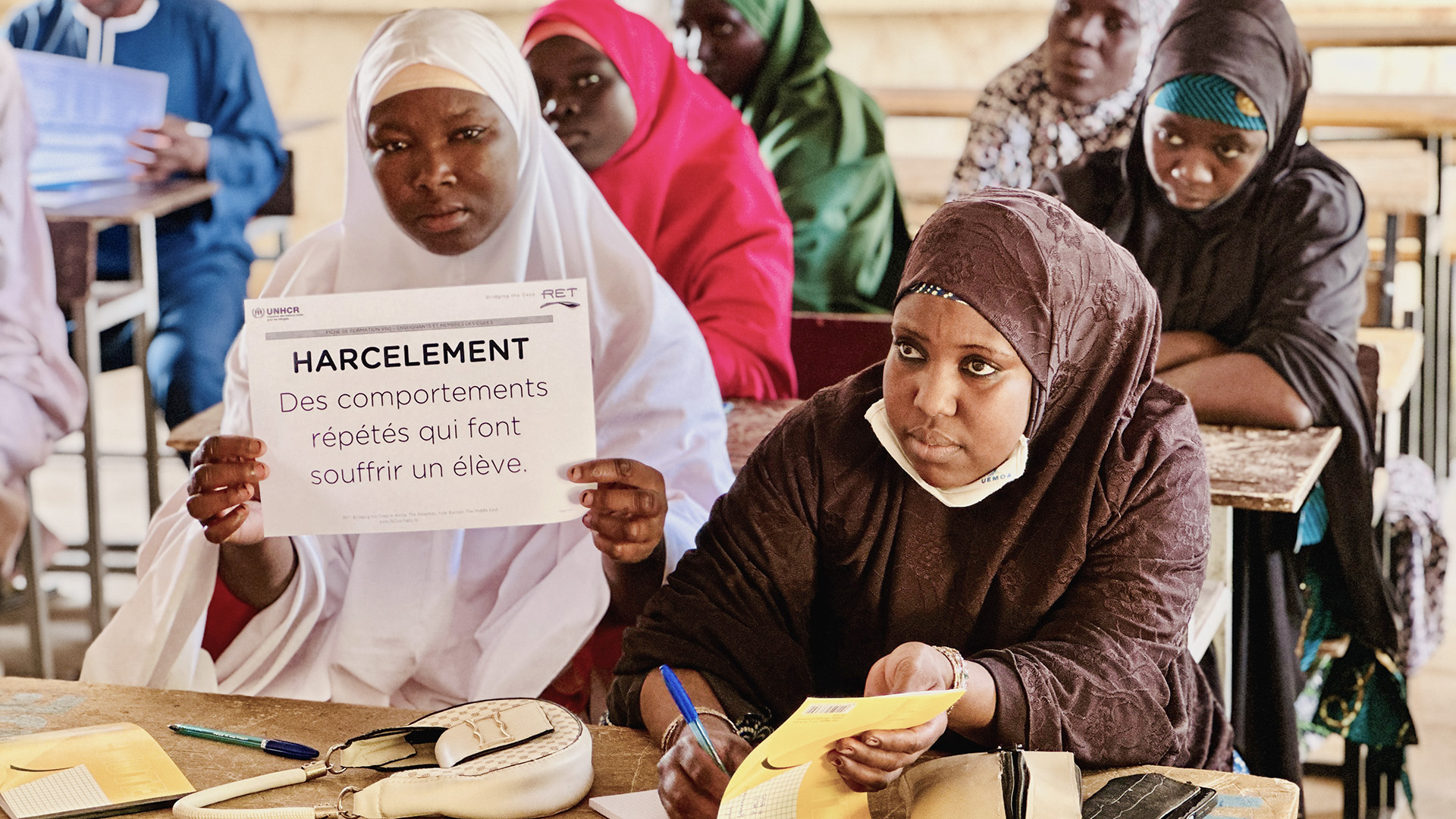
Photo © RET Germany
Article by RET Global Communications
MARADI, NIGER – “Before the training”, she admits, “there were signs I did not always recognize. A student who suddenly stopped participating. A girl who avoided certain areas of the school. Silence that felt heavier than usual.”
Today, in Garin Kaka, that same teacher feels different. She feels equipped.
In fragile environments like the Maradi region of Niger where displacement, poverty, and fragile social dynamics heighten risks for children—especially girls— school is often the only stable space in a child’s life. But without protection, even classrooms can become places of risk.
That is why RET, in partnership with UNHCR, is investing in something deeper than infrastructure or enrollment numbers. It is investing in safety — in the human systems that protect children from Gender-Based Violence (GBV) and Sexual Exploitation and Abuse (PSEA).


Photo © RET Germany
Want to support our work across the world?
Turning Awareness into Protection
This year (2026), sixty teachers and community actors — 34 women and 26 men — were trained across Garin Kaka, Dan Dadji Makaou, and surrounding areas. They represent school management committees (CGDES – Comité de Gestion Décentralisée des Établissements Scolaires) and girls’ education structures (SCOFI – Scolarisation de la Fille), the backbone of community-based school governance.
“This training went beyond technique — it taught us to see.”
Teachers learned to identify early warning signs of violence: sudden withdrawal, fear, unexplained absences. They apply survivor-centered approaches and use confidential reporting systems. Community members strengthened referral pathways to ensure that when a child speaks up, support follows—safely and ethically. The three training sessions were conducted from 30–31 January in Dan Dadji Makaou, from 6–7 February in Chadakori, and from 13–14 February in Garin Kaka, ensuring that protection mechanisms were reinforced across multiple school communities.
For many, it changed how they understand their role. They are not only educators. They are protectors.
A Shift in Practice
In Garin Kaka, the teacher who once felt uncertain now describes feeling confident. She knows how to respond without causing harm. She knows who to contact. Most importantly, she knows how to listen.
In Dan Dadji Makaou, parents speak differently about the school. Dialogue between families and teachers has deepened. Conversations about girls’ safety, once avoided, are now open and collective. Families are more aware of risks and more willing to act.
The impact goes beyond individual skills. It strengthens the school system itself. Protection mechanisms are now embedded within daily school practices—monitoring student well-being, responding to vulnerabilities, and preventing abuse before it escalates.
Beyond the Classroom
When children feel safe, they stay in school. When girls are protected, they complete their education. When communities trust protection systems, resilience takes root. This initiative rests on three pillars: strengthening local ownership, transforming harmful norms, and embedding sustainable protection mechanisms within school structures.
Because in fragile contexts, preventing Gender-Based Violence (GBV) and Protection from Sexual Exploitation and Abuse (PSEA) is not an optional addition to education — it is the foundation. By empowering teachers and communities to act early, respond ethically, and protect consistently, RET and its partners are helping ensure that every classroom becomes what it should be: a space where children can learn without fear.
Protecting schools is not just about preventing harm. It is about restoring confidence, preserving dignity, and safeguarding the future — one child at a time.
The project is implemented by RET Germany in partnership with the United Nations High Commissioner for Refugees (UNHCR).
To support our critical work across the world, make a donation to RET Germany today.
You must be logged in to post a comment.