

BELIZE

Democracy and governance
Youth empowerment and youth civic engagement

Economic growth and development
Business development, entrepreneurship, vocational training

Protection
Human trafficking, child protection, family protection, refugee and asylum seekers
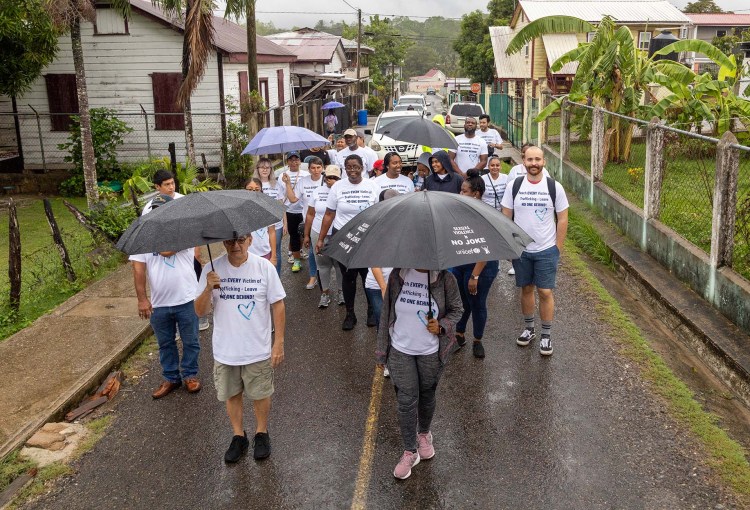
A walkathon organized by CSO coalition group in partnership with Benque Viejo Del Carmen Town Council, to commemorate World Day Against Trafficking in Persons. Photo © RET International.
To help us continue this critical work in Belize, join our mission, and make a monthly donation to RET today.
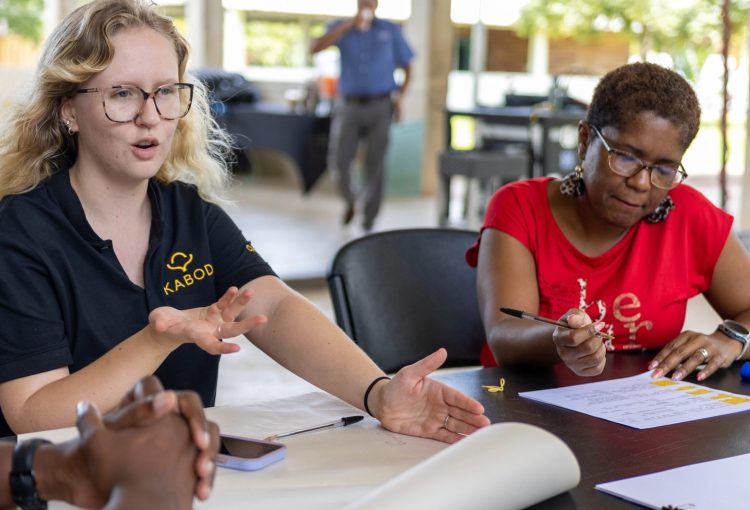

Together We Can: How We’re Combatting Human Trafficking in Belize
In late July, nearly 80 motivated individuals took part in SAFE Belize's walk-a-thon to raise

RET and the University of Belize Collaborate on Anti-Human Trafficking Course
The groundbreaking collaboration between RET and the University of Belize promises to create a powerful
TLEAP Public Awareness Campaign Launched in Belize
RET Belize has launched a public awareness campaign for the Transport Leaders Empowered Through Education,
Belize is a Central American country with a population of 400,000. It is a neighbor to the Northern Territories region, which is comprised of El Salvador, Guatemala, Honduras, and Nicaragua.
In recent years, a number of people from this region have fled to Belize to seek refugee protection against violence in their own countries. Many of the refugees are vulnerable women and children taking this journey out of desperation, and to flee violence. This violence primarily stems from gang activities and is exacerbated by the drug route forcing itself through Central America.
With the influx of individuals seeking asylum, Belize has been improving standard operating procedures for identification, reception and referral of refugees, while simultaneously upgrading the quality of refugee status determination processes. The pandemic caused some delays in advancing sustainable solutions in the livelihood sector and has limited the absorption capacity of the formal and informal economies.
Within its recovery plan, Belize has identified Technical Vocational Education and Training, when adopting new transformational vocations, as key instrument for creating new growth industries, while possessing sufficient potential to rebuild Belize’s economy and to include young refugees, people in flight and exile, and vulnerable nationals in delivering individual and common benefits.
RET has been operational in Belize in 2015, first through interventions centered in Belize City and the Cayo District, aiming to reduce the risk of youth engagement in criminal activities by building employment and leadership opportunities through income-generating opportunities for vulnerable youth.
The programs focused on providing youth with skills and capacities to become employed or self-employed and enable them to take up leadership roles in their communities, and therefore become positive social change actors. This subsequently led to an increase in the number of youth associations and youth-led organizations in the communities.

Additionally, RET worked with national organizations to develop a national program that addresses the socio-economic, psychosocial, and educational challenges of vulnerable youth, families, and communities.
We also provided job creation opportunities for youth and marginalized communities as an alternative to crime and violence and provided at-risk youth with productive alternative activities that increase their leadership skills, apprenticeship, and income-generating opportunities.
Beginning in 2021, and extending through 2025, RET’s SAFE Belize project is developing a Standard Operating Procedures document for shelters and other accommodations for trafficking in persons, to present and validate with the Government of Belize (GOB), that will create standardize procedures for shelters and procedures for their coordination and collaboration with GOB. It can then be used to support development of regulations for shelter operations and to provide a guidance document that sets out a checklist with the requirements for formal registration as a legal entity and basic structures required to operate as a shelter and to meet the differentiated needs of victims while in shelters.
Furthermore, the project aims to build the institutional capacity of existing and potential shelters, create a civil society organization (CSO) coalition group for strengthened coordination of CSO organizations and improved collaboration with GOB and lastly to implement a broad education and awareness campaign to strengthen resilience, knowledge, attitudes and practices to increase responsiveness to trafficking in persons at the national level.