

Beyond the Fields: How Practical Training protected families in Wadi Khaled
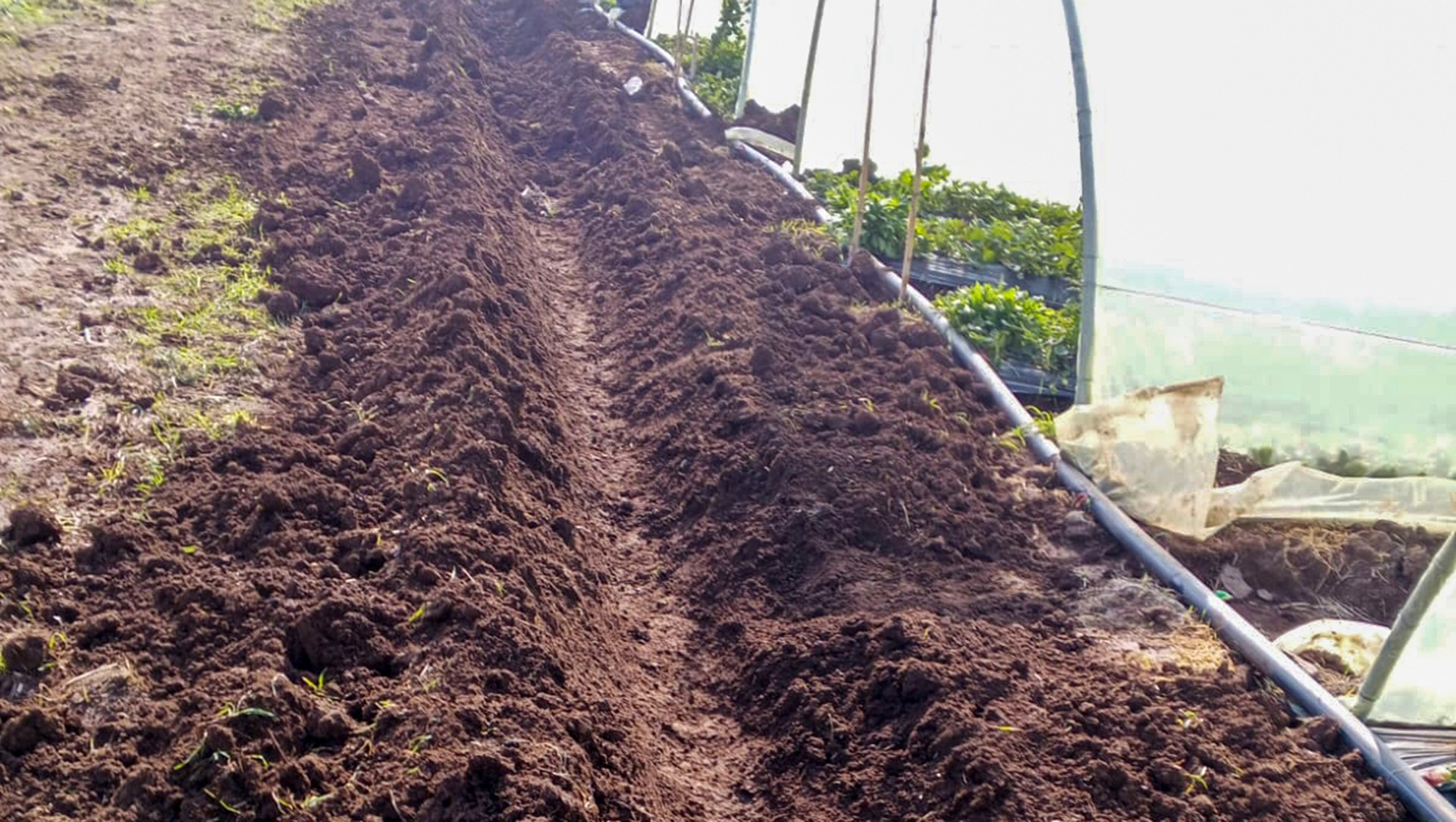
Photo courtesy GATE Lebanon, © RET Germany
Article by Carine Harouny, Operations and Communications Officer for GATE Lebanon, RET’s local implementing partner
AKKAR, LEBANON – In northern Lebanon, communities in Akkar continue to face economic hardship, environmental pressure, and limited access to safe livelihood opportunities. In this fragile context, RET Germany, funded by the German Federal Ministry for Economic Cooperation and Development (BMZ) and implemented in collaboration with GATE Lebanon, is working to strengthen resilience, improve food security, and promote gender equality among vulnerable groups.
As part of the project “Improving Food Security and Livelihoods, Inclusion of Women and Vulnerable Groups, and Promoting Gender Equality in Northern Lebanon,” Syrian agricultural workers from the Wadi Khaled Union of Municipalities participated in a specialized Integrated Pest Management (IPM) training focused on strawberry production in greenhouses. IPM promotes safer and more sustainable farming by reducing harmful pesticide use while protecting crops, workers, and the surrounding environment.
Want to support our work across the world?
The training strengthened good agricultural practices, improved crop quality, and promoted safer working conditions—an urgent need in a sector that is physically demanding and often under-resourced.
But the impact of this initiative extended far beyond the fields.
To support safer and more dignified working environments, participants received protective and working equipment, including jackets, boots, gloves, and shovels. Shortly after the distribution, severe storms and flooding struck the Khat El Petrol area, turning this agricultural support into an unexpected lifeline.
Fatima Khaled Al-Hassan, one of the trainees, described how floodwaters entered homes and blocked roads, leaving families struggling to respond. The boots and jacket she received protected her from cold and water, while the shovel enabled her to clear mud and debris to help safeguard her household during the emergency.
Another participant, Naifa Ibrahim Satouf, shared a similar experience. Only days after receiving the equipment, floodwaters surrounded her home. Using the shovel to redirect water and relying on the gloves and boots for protection, she was able to respond quickly and safely. She highlighted the high quality of the gear and how it made a real difference during a moment of crisis.
These stories show how agricultural training and safety support can extend far beyond the fields—strengthening communities’ ability to cope with emergencies while improving livelihoods, dignity, and working conditions. This reflects our broader approach: empowerment that goes beyond training sessions and responds to the realities people face in their daily lives.
The project is funded by the Federal Ministry for Economic Cooperation and Development of the Federal Republic of Germany (BMZ) through RET Germany and implemented in collaboration with GATE Lebanon.
To support our critical work across the world, make a donation to RET Germany today.