

Leading the Way: RET Demonstrates Regional Expertise in Risk Management, Human Mobility and Safe Education at SICA Forum
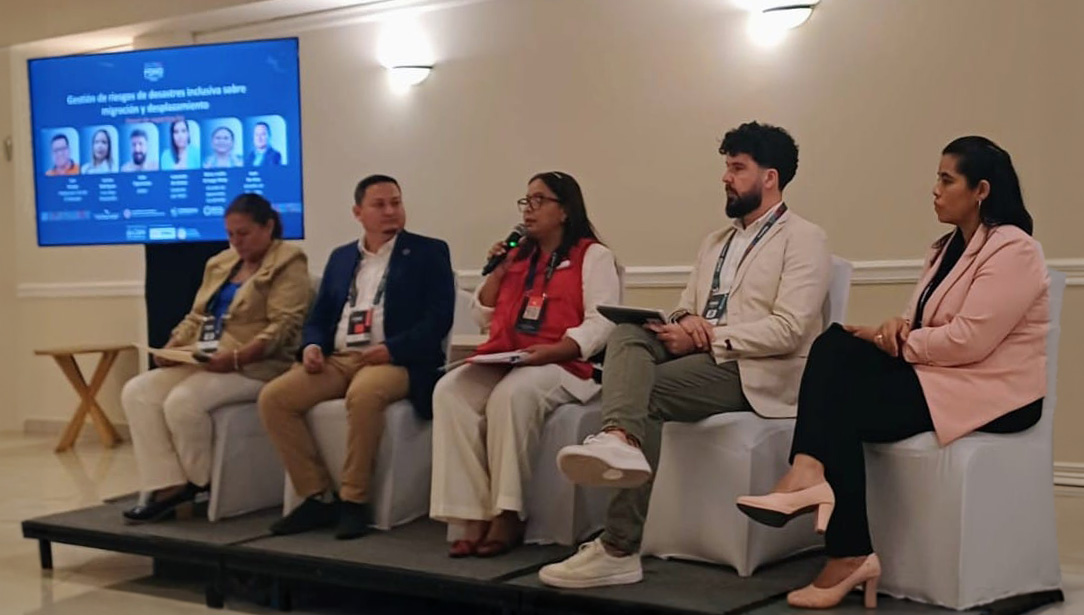
Leonarda De Gracia from RET, at IOM’s Mobility Panel. Photo by Paula Uribe, © RET International
Article by Paula Uribe, Regional Technical Manager of RET in Latin America and the Caribbean
PANAMA CITY, PANAMA – RET International participated in the Regional Forum on the Central American Policy for Integrated Disaster Risk Management (PCGIR), which took place from March 17 to 19 in Panama, organized by the National Civil Protection System of Panama (SINAPROC) and the Coordination Center for Disaster Prevention in Central America and the Dominican Republic (CEPREDENAC). technical body of the Central American Integration System (SICA).
The event brought together authorities, regional organizations and humanitarian actors to analyze progress and define priorities in the face of the increase in extreme events, and the growing vulnerability of communities exposed to multiple risks.
In this space, RET positioned its regional expertise on key issues such as local risk governance, community resilience, humanitarian coordination, the relationship between human mobility and disasters, and the promotion of safe and resilient educational environments, contributing to the technical and strategic debate on the institutionalization of integrated risk management from the territory.

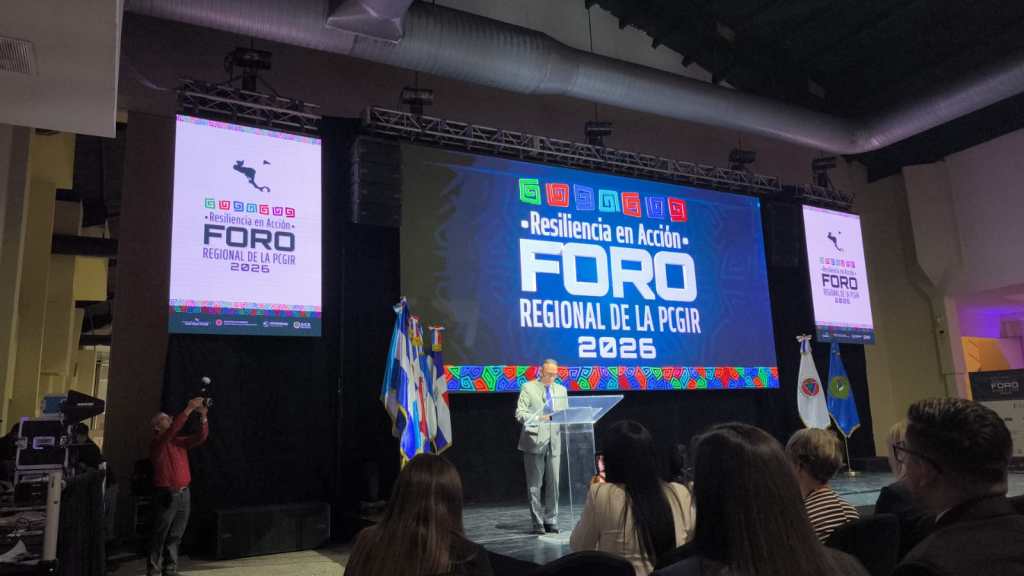
Magnolia Santamaria of RET opening the Forum at the III Safe Schools Forum Keynote Conference. Photo by Paula Uribe, © RET International
During the panel of experts on humanitarian coordination mechanisms, Magnolia Santamaría, Regional Director of Operations for Latin America and the Caribbean, highlighted the need to move towards anticipatory coordination approaches based on territorial risk analysis, integrated information systems and community participation, which allow for improved decision-making and reduced differentiated impacts in emergency contexts.
In the thematic event on migration and displacement in disaster contexts, organized by IOM, Leonarda De Gracia, RET Program Coordinator in Panama, participated on behalf of the LAC-WDN Coalition, underlining how climate risks are redefining the dynamics of human mobility in Latin America and the Caribbean, generating differentiated impacts on migrants, displaced people and host communities, and evidencing the need to promote durable solutions based on territorial resilience and multilevel governance.
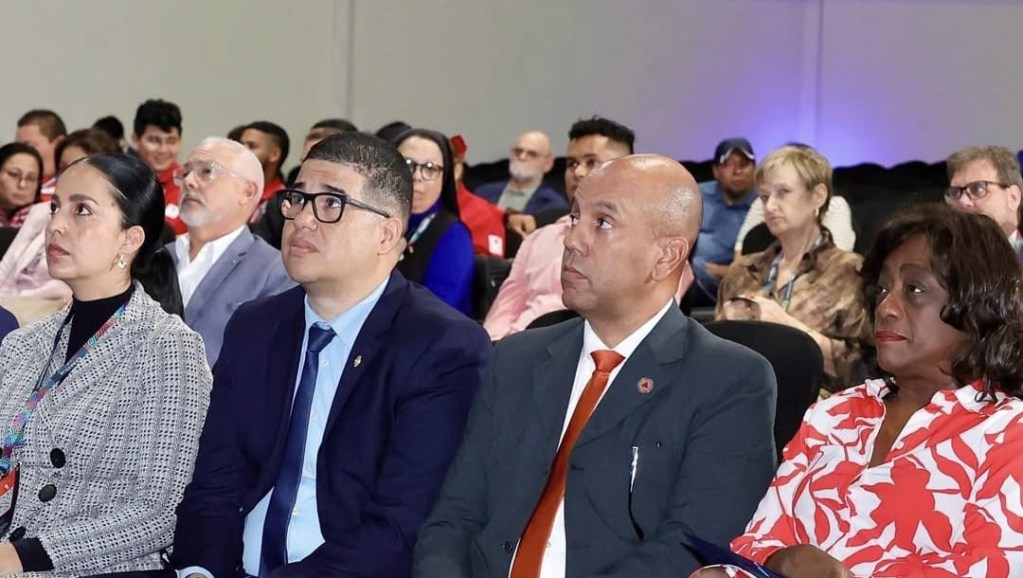
Photos by Paula Uribe, © RET International
The attendees recognized the challenges and the key role of women in the generation of knowledge and solutions. Each participant wroLikewise, within the framework of the forum, the III SICA Safe Schools Forum was held, where Magnolia Santamaría opened the space on behalf of the Regional Education Group for Latin America and the Caribbean (GRE-LAC) with a keynote speech in which she highlighted the Comprehensive School Safety Framework (CSSF 2022–2030) as a strategic instrument to guarantee educational continuity in the face of multiple threats. During her speech, she stressed that education saves lives, not only by protecting the right to learn in crisis contexts, but also by strengthening preparedness, response and recovery capacities in communities.
Within the framework of the thematic event on territorial management, mobility and governance, RET participated in a panel of experiences and good practices focused on the link between territorial management and integrated disaster risk management. From its technical cooperation role, RET accompanied the socialization of the work carried out together with the Association of Municipalities of Panama (AMUPA), highlighting the importance of institutional strengthening of local governments as a basis for territorializing risk management, improving inter-institutional coordination and promoting more anticipatory and inclusive responses to the impacts of disasters and the dynamics of human mobility.
RET’s participation in this forum reaffirms its commitment to accompany governments and communities in the construction of more inclusive, anticipatory and people-centered risk management systems, promoting comprehensive solutions that contribute to reducing vulnerabilities and strengthening resilience in the face of the convergence of climate, social and human mobility crises in the region.lience, educational inclusion and protection of children and adolescents, promoting safe environments free of violence.
To support our work, make a donation to RET today.
You must be logged in to post a comment.