

Building Stronger School Nutrition Systems in M’Bera Camp
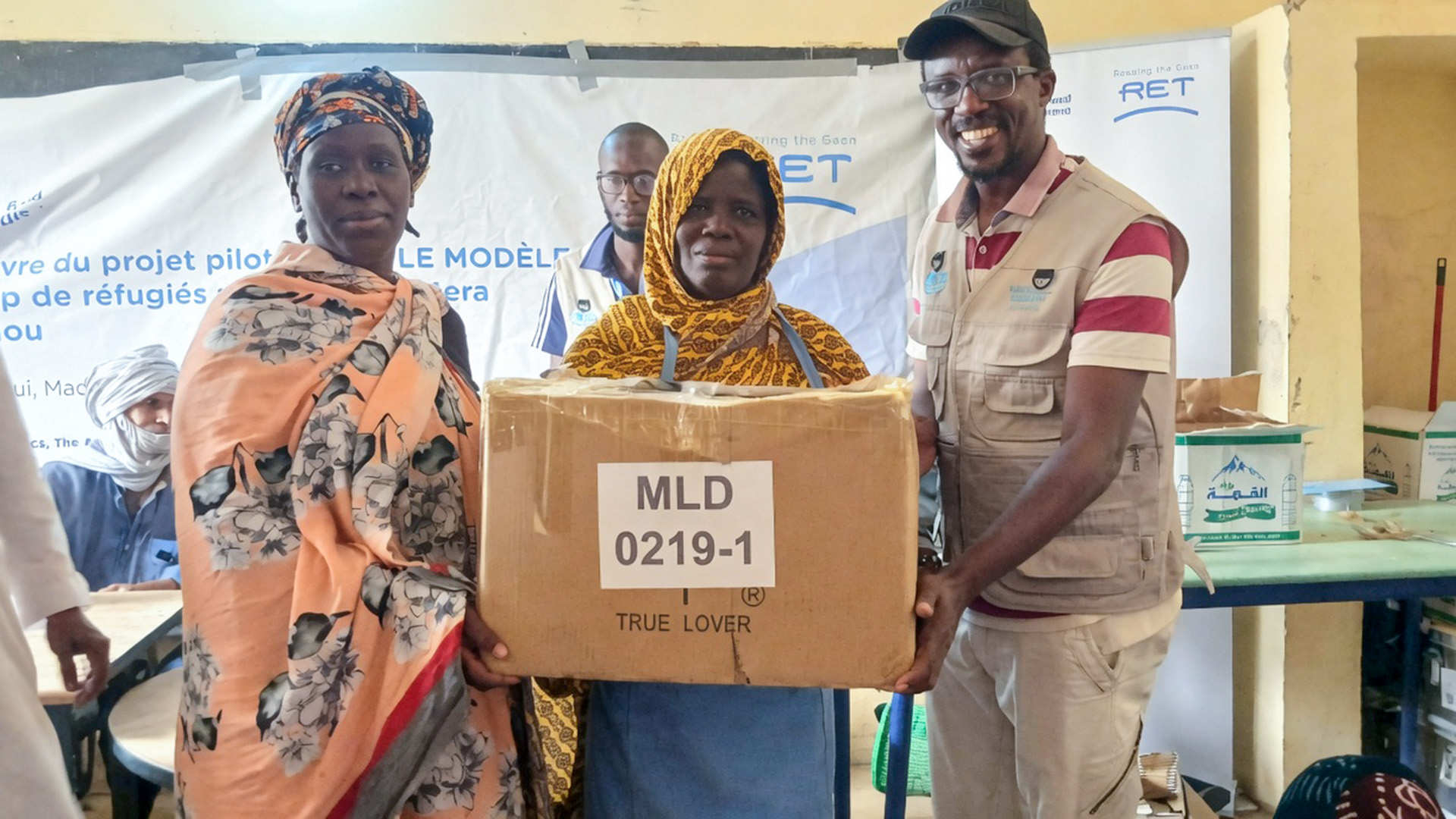
Photo © RET International
Article by Prosper ICOYITUNGIYE, Program Manager for RET Mauritania
BASSIKOUNOU, MAURITANIA – Since 2019, RET has been working in Mauritania to support communities affected by displacement, particularly in and around the M’Bera refugee camp. The region faces persistent challenges: limited access to quality education, fragile food security, and overstretched community systems. RET’s work aims to bridge these gaps by strengthening resilience and expanding access to essential services for women, youth, and marginalized groups .
Within this context, the Model School Project, funded by the World Food Programme (WFP), plays a crucial role in improving school nutrition and hygiene—two pillars that directly influence children’s learning, health, and attendance.
To address gaps in food preparation, hygiene practices, and canteen management, RET organized a two‑day training for 127 participants from eight schools in M’Bera camp. The sessions covered balanced nutrition, food safety, canteen management, and inclusion, with a dedicated module on gender, protection, and menstrual hygiene management. As one participant shared, “This training helped me better understand the importance of each food group… and how to prepare balanced meals.”


Photo © RET International
Want to support our work across the world?
Pre‑ and post‑training evaluations showed a significant improvement in knowledge and practices, particularly in hygiene and meal preparation. Participants expressed their commitment to sharing what they learned, creating a multiplier effect within the community.
To reinforce these skills, RET and WFP organized an inter‑school culinary competition at School 3, bringing together 116 participants, including educators, community members, UNHCR, and CIAUD. Cooks showcased nutritious dishes prepared with both school‑supplied ingredients and local products such as cereals, vegetables, and locally sourced butter. A jury evaluated the meals based on nutritional value, hygiene, innovation, and presentation. School 3 earned first place, a moment of pride for students and cooks alike. “We are very proud of our mothers… If we had these meals every day, no child would stay home,” said one student.
These activities demonstrate how practical training, community engagement, and local resources can strengthen school nutrition systems—helping children learn better, eat better, and grow with dignity.
The project “Model School Project” is funded by the World Food Programme and implemented by RET Internaitonal in Mauritania.
To support our critical work across the world, make a donation to RET today.
You must be logged in to post a comment.