

Healthy and Equal Love: Preventing Violence from Childhood and Adolescence through the EstudiANDO Program in Ecuador
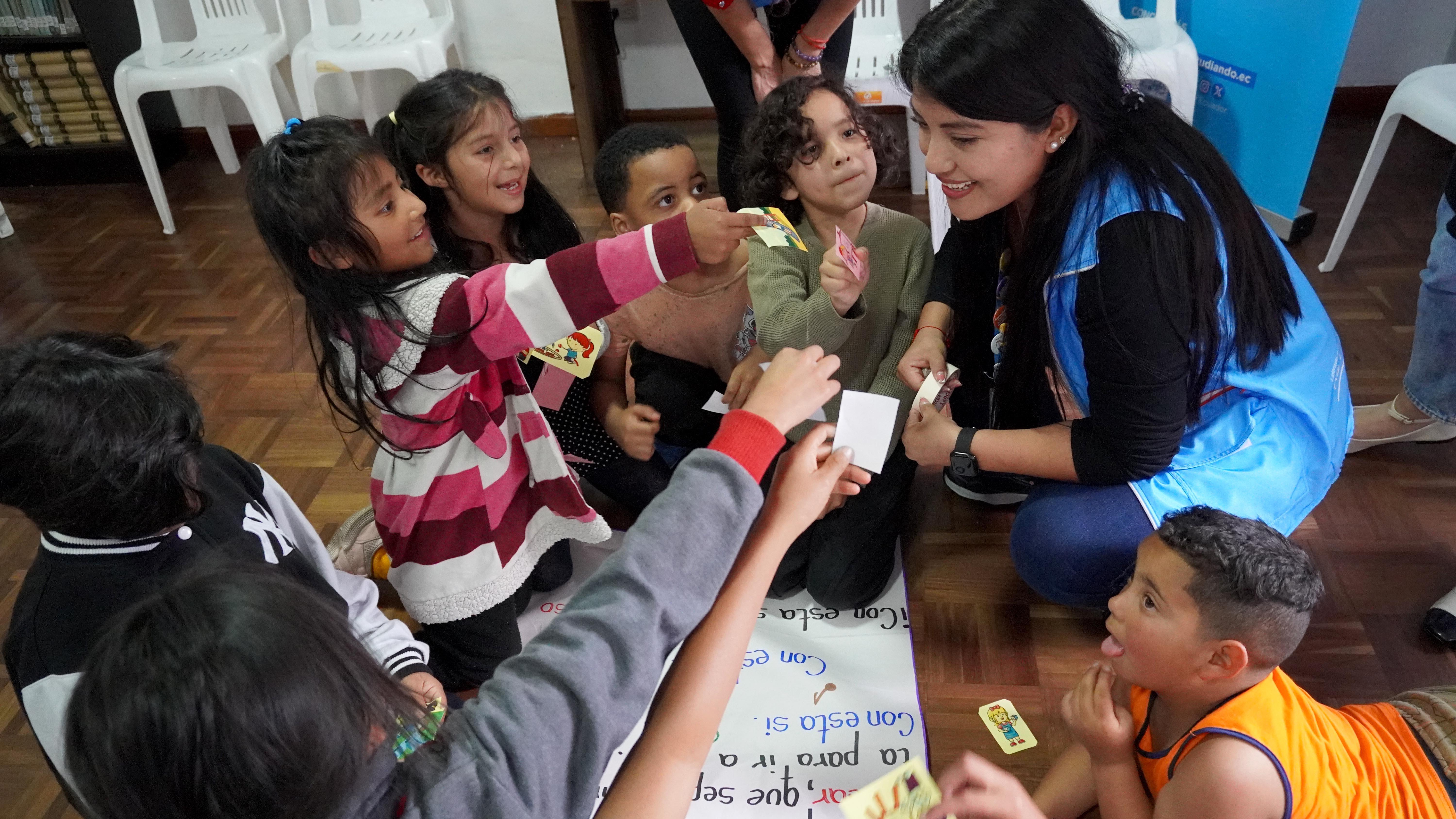
Photo by María José Muñoz, © RET International
Article by Michelle Alvarado, Communications Officer for RET in Ecuador
QUITO, ECUADOR – Healthy , free, and equal love does not begin in adulthood; it is built from childhood and strengthened during adolescence. The first ideas about love, relationships and gender roles are formed through stories, songs, social networks and the environment. These beliefs that we learn with the family, school, society as a whole, influence the way we build interpersonal relationships during adolescence, as well as mutual respect, autonomy and co-responsibility between people.
When these narratives reinforce the myths of romantic love, they can normalize behaviors that later lead to situations of control, manipulation, jealousy, dependence, justifying situations of dating violence or unequal relationships. Therefore, the prevention of violence must begin at an early age.
Through the Multi-Year Resilience Program: EstudiANDO, our teams in Ecuador help two workshops with children and adolescents to promote educational spaces that strengthen equality, emotional well-being, personal autonomy, mutual care, and the development of healthy relationships.
Transforming the myths of love into dreams
Participating girls and boys modified the lyrics of the traditional song “Arroz con leche”, changing phrases that reinforce traditional gender roles. Words like “marry” were replaced by “study,” and activities like “sewing” or “embroidery” by “painting” or “singing.”
This activity promotes education in equality, breaks stereotypes and encourages new narratives about what it means to grow and develop without barriers based on gender. In addition, it promotes a space for reflection for the prevention of marriage and early unions in girls and adolescents so that all girls and adolescents can exercise their right to education and the completion of studies in a safe and protective environment in accordance with their life project.
Children also changed the classic princess tales, in which women are represented as sensitive and submissive characters who need to be rescued by a prince to get married, for new narratives that promote autonomy, equality and dreams.

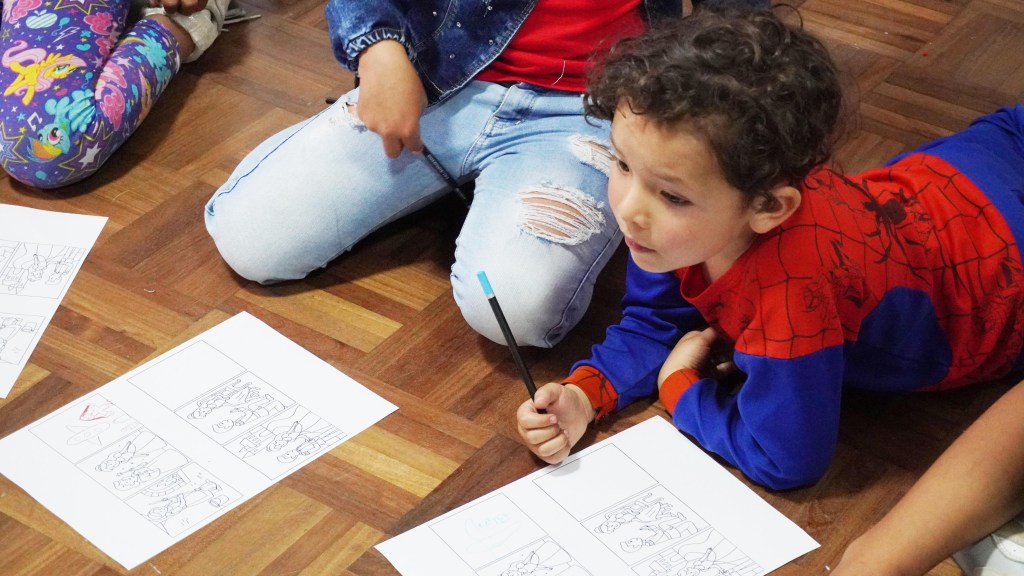
Photos by María José Muñoz, © RET International
Adolescence, music and violence prevention
In the workshop with adolescents, current songs were analyzed to identify phrases that reinforce the myths of romantic love and that can normalize different forms of violence.
Through the use of the violentometer, they identified behaviors that sometimes become common in youth relationships and reflected on the difference between healthy love and early signs of dating violence. Beliefs were analyzed, such as “jealous of my partner is a way of showing love”; “check my partner’s cell phone”; “lying, cheating or hitting”; or the fact that “men cannot show tenderness, or insecurity”. These behaviors are normalized in our society and generate unequal and insecure relationships that must be transformed to prevent violence in dating and adulthood.
These types of activities strengthen resilience, critical thinking, and the ability to recognize relationships based on respect and equality.
Education for respect-based relationships
Building healthy relationships requires strengthening self-love, self-esteem, the ability to make decisions autonomously, transforming learned gender roles, as well as promoting safe spaces, dialogue, and practical tools. Through participatory dynamics, the EstudiANDO Program is committed to a culture of peace where love does not imply control or sacrifice, but respect, equality and emotional well-being.
“EstudiANDO: inclusion goes to school” is a program funded by Education Cannot Wait, led by RET International, in consortium with Plan International, ChildFund Ecuador and the Ibero-American Institute of Natural and Cultural Heritage of the Andrés Bello Convention.
To support our work, make a donation to RET today.
You must be logged in to post a comment.