

Children on the Move: An Education Space to Keep Moving Forward in Ecuador
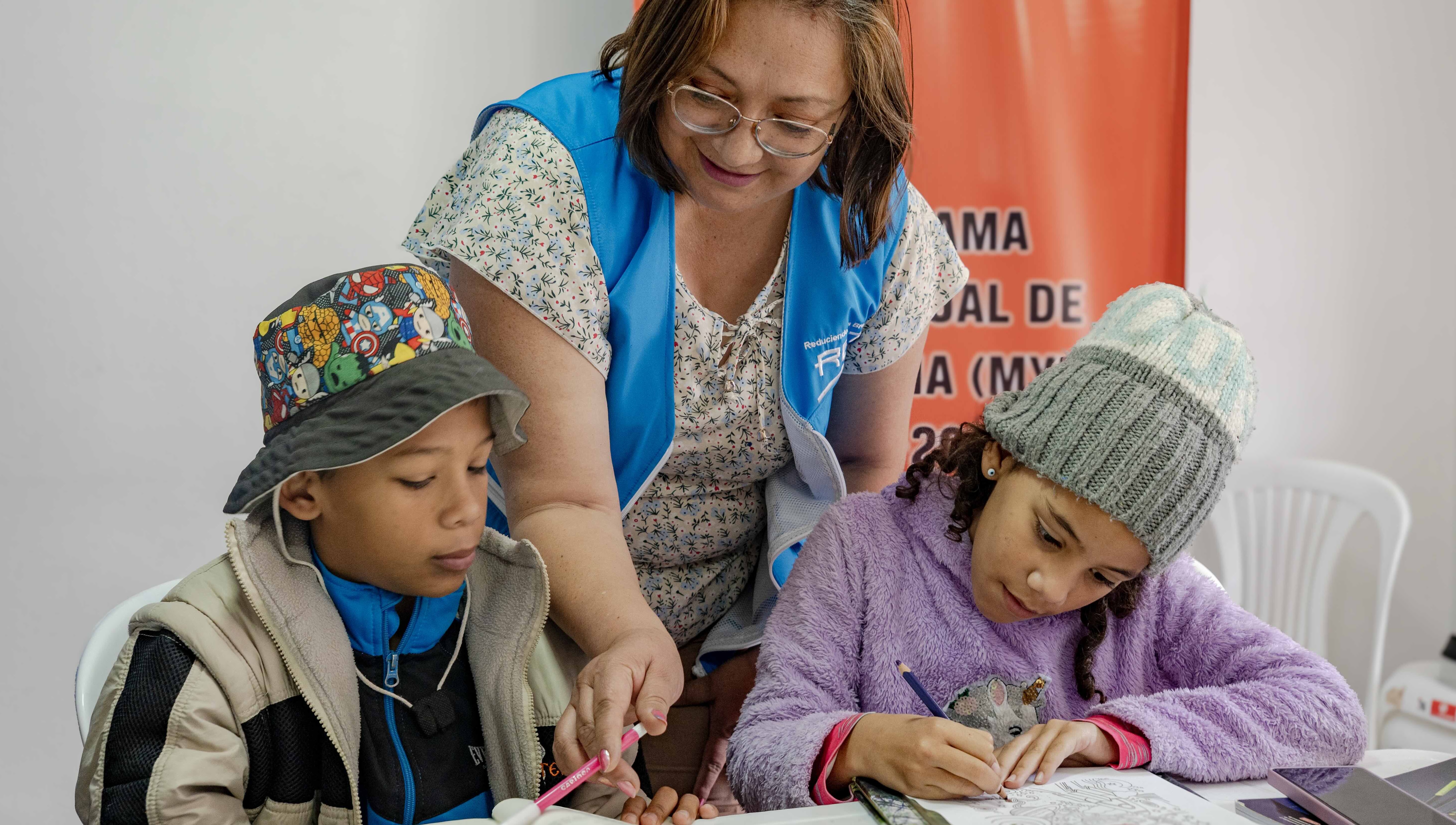
Photo by Michelle Alvarado, © RET International
Article by Michelle Alvarado, Communications Officer for RET in Ecuador
QUITO, ECUADOR – They enter the EstudiANDO learning space holding their hands. In the middle is Stefany, 31 years old, holding Alana, 10, with her backpack and a hat barely containing her curls, and Edwin, one year older, with his backpack and a cap that reveals his love for superheroes. They greet other children before taking their seats.
Twice a week, they attend EstudiANDO’s remedial learning and academic support sessions. It is not just homework assistance—it is about recovering learning, building confidence, and not falling behind. Meanwhile, Stefany waits with other mothers before taking them to their afternoon school shift and starting her workday. In her hands, two oat drinks and a bag of bread.
They left Venezuela in 2020. Since then, life has meant constant movement between countries, cities, and schools. Stefany has changed jobs many times: waitress, seamstress, and now coffee vendor in the street of Quito, far from the path she imagined when she studied Public Relations. Yet she has not stopped doing what she knows best: connecting, navigating, and persisting. Alana and Edwin’s education is not just one more circumstance in her story; it is the decision that shapes all the others.
Education as a Daily Achievement
The most constant element in Alana and Edwin’s lives has not been a home, but rather the challenge of staying in school—relearning content, adapting to different systems, and explaining where they come from. Along this journey, education stopped being routine and became an achievement.
Enrolling in school in Peru was relatively easy. Stefany’s sister-in-law helped them attend the same school as their cousins. They began their education during the COVID-19 pandemic, learning through a shared screen.
When in-person classes resumed, new challenges emerged.
“Face-to-face classes were difficult for them, especially for Edwin,” Stefany recalls. “Education is completely different in each country. I helped with some topics, but we didn’t understand others. He did his best.”
This is the invisible gap left by mobility: subjects that do not align and content that progresses at different rates across countries. Edwin was trying to piece together a puzzle that did not come in the same box—something difficult to do in a classroom with thirty students.
“The teacher told me she didn’t have time for just one child—she had 30 others,” Stefany explains.
Academic difficulties began to accumulate, along with tensions with the school. Learning gaps, combined with a health condition that kept the children out of school for a month, made the situation more fragile. Stefany provided medical reports, explained the situation, and sought solutions. Then came the suggestions: stop working, pay for school transportation, reorganize the household economy.
When she explained that this was not possible, the situation escalated. The school principal warned that she could report her to the authorities for negligence. It was no longer just an academic challenge—it was the risk that the school, a space meant to guarantee rights, could become a threat.
Stefany chose to start again.

Photo by Michelle Alvarado, © RET International
EstudiANDO: A new space for re-learning
Stefany arrived in Ecuador without knowing the education system and without official school records for her children. While searching for information and moving between cities, Alana and Edwin studied at home with her for nearly a year.
They attempted to enroll in school, but the option meant going backward.
“I knew it was important for my children to recover their learning, but I worried about bullying if they were placed in a lower grade,” Stefany explains.
That was not an option.
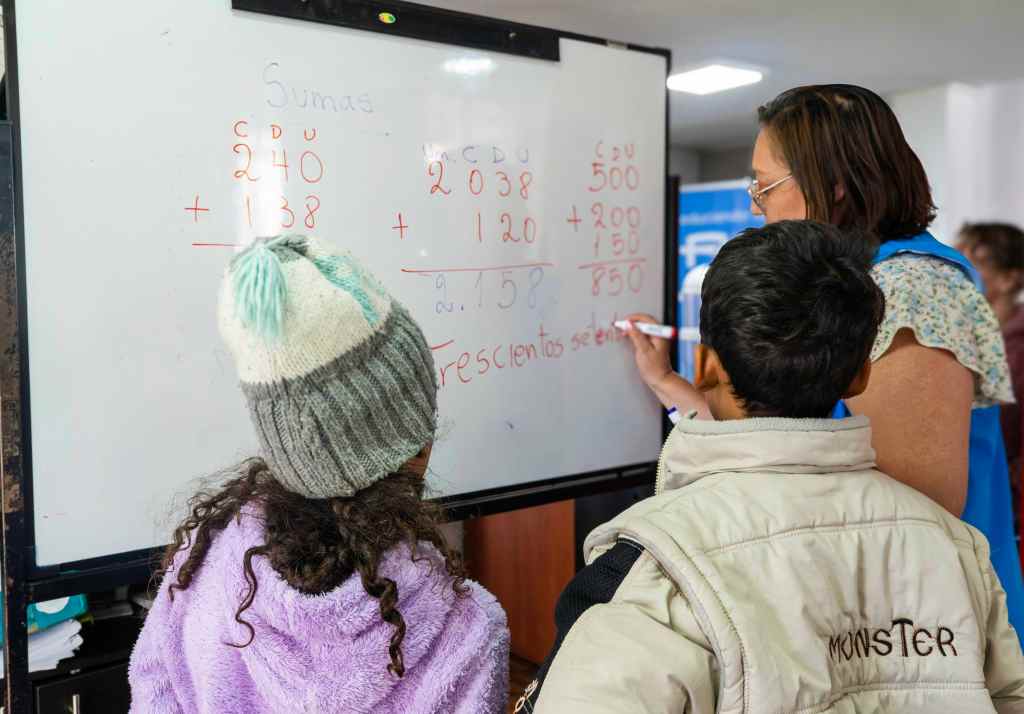
Then, a foundation referred them to the EstudiANDO programme. The siblings entered a different kind of space: a bookshelf filled with children’s literature and subject-specific books, and tables with drawing materials and creative activities. The facilitators move from child to child, supporting them individually.
“It looks like a school, but it’s more fun. They help us with homework, and we also play when we finish,” says Alana.
Alana and Edwin began their learning recovery process in Language, Mathematics, Natural Sciences, and Social Studies. They strengthened their knowledge and prepared for placement exams aligned with their age.
“On exam day, they were nervous. Edwin was accepted into sixth grade, and Alana into fifth grade. It was a relief—they no longer had to fall further behind,” Stefany recalls.

Photos by Michelle Alvarado, © RET International
Dreams Do Not Stop
When children and adolescents move across countries, they face many changes: family dynamics, familiar environments, and even how to solve a math problem or the words used to ask for a pen. But something travels with them—their dreams.
“I want to be a farmer so I can have animals, fruits, and vegetables. Although I’m afraid of scarecrows,” Edwin says, laughing.
“I could be a scarecrow,” Alana replies, also laughing.
“I want to be a dancer or a singer because I’d love to spend all day listening to music.”
Stefany, Alana, and Edwin prepare to leave the learning space and head to school. Once again, they hold hands.
About the Program
“EstudiANDO: Inclusion Goes to School” is a program funded by Education Cannot Wait, led by RET International, in consortium with Plan International, ChildFund Ecuador and the Instituto Iberoamericano del Patrimonio Natural y Cultural del Convenio Andrés Bello.
Its objective is to strengthen the resilience, educational inclusion and protection of children and adolescents, promoting safe environments free of violence.
To support our work, make a donation to RET today.
You must be logged in to post a comment.