

Arabic Literacy Training Empowers Syrian Children’s Education in Türkiye
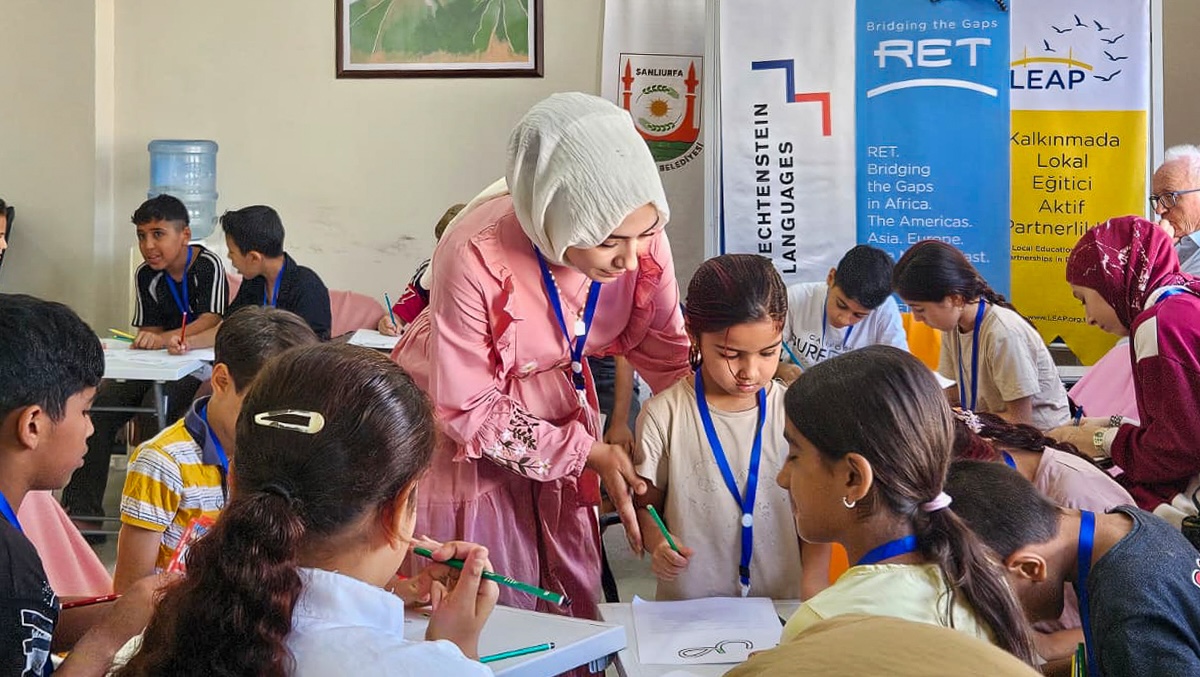
Photo by LEAP, © RET International
Article by Ali Selim Kara, Communications Officer for LEAP
SANLIURFA, TÜRKIYE — As part of the language learning program implemented by RET International and LEAP in Türkiye, a three-week Training of Trainers (ToT) is being conducted in Şanlıurfa for the four trainers who will work on the Arabic literacy component. The training, which began in late August and will conclude on September 18, is being carried out in cooperation with Liechtenstein Languages (LieLa), one of the program’s partners.
This initiative aims to strengthen the methodological and practical skills the Arabic trainers need in order to bring the interactive and participatory language teaching approach adopted by the program effectively into the classroom. Trainers who complete the program will begin working with children in the Arabic literacy courses to be held in Kilis, Samsun, Mardin, and Şanlıurfa.
Why Arabic Literacy?
Many Syrian children who were born and raised in Türkiye, or who came to Türkiye at a very young age and began their education here, speak Arabic fluently in their daily lives; yet because they have continued their formal education in Turkish, they have not had the opportunity to systematically develop reading and writing skills in their mother tongue.
With changing conditions in Syria and the prospect of voluntary returns, Arabic literacy has become even more important for children’s educational continuity. How their children will continue their education in Syria, and how gaps in Arabic reading and writing skills will affect their adaptation to the Syrian education system, are among the leading concerns of families considering return.
Introduced in response to this need, the newly added Arabic literacy component aims to strengthen children’s basic reading and writing skills, support continuity in their education, and ease their transition to and adaptation within the education system should they continue their schooling in Syria.
Under the program, structured learning opportunities are offered to children who need support with reading and writing in Arabic, and children’s literacy skills in their mother tongue are supported through the Arabic trainers assigned to the four provinces.

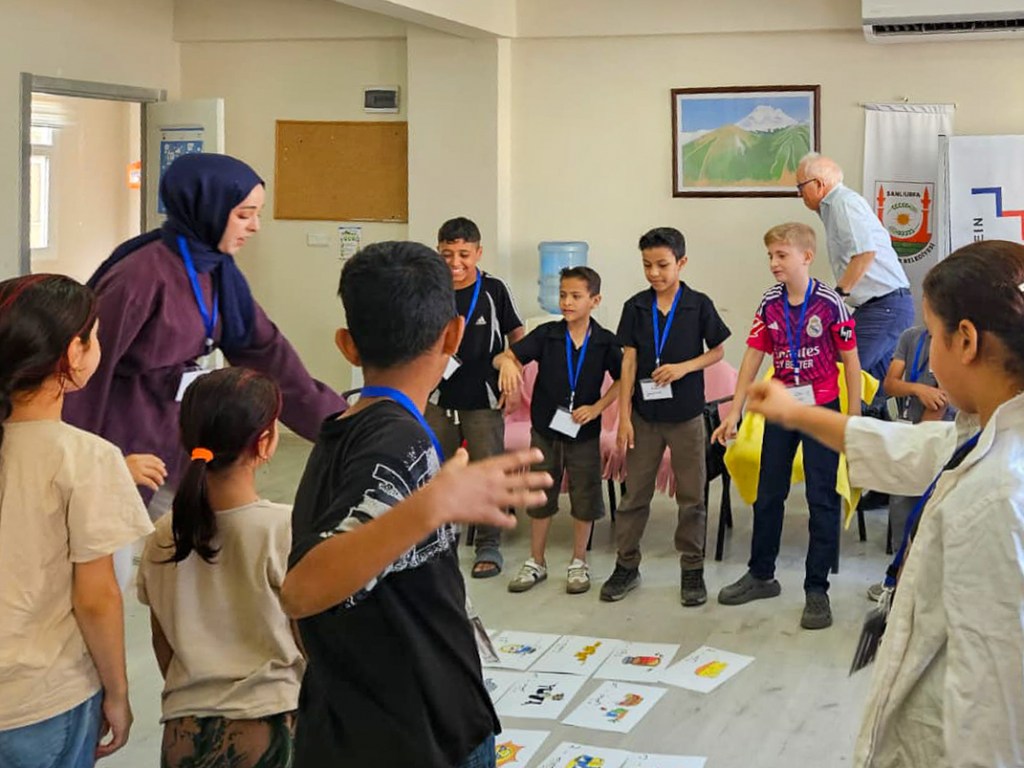
Photos by LEAP, © RET International
Hands-On Learning in the Classroom
At the center of the training program is the interactive language teaching approach of LieLa, which develops teaching materials for trainers across different languages and learning settings and brings international experience to this field. In this approach, the learning process is conducted entirely in the target language, while trainers adapt the language they use to the level of the participants, drawing on gestures, movement, visual explanation, and hands-on techniques to support comprehension without the need for translation.
In the “encoding” technique, one of the approach’s most distinctive methods, new words are learned and reinforced not through repetition alone but by being linked to movement, sound, emotion, and group interaction. Language learning thus becomes an interactive and experiential process in which participants are actively involved.
The trainers carry the knowledge and methods they gain during the training directly into the classroom, finding the opportunity to apply them in sessions held with Syrian children aged 9 to 12 living in Şanlıurfa. The sessions are supported by the observations and feedback of the project’s experienced Turkish and English trainers and of a LieLa representative.
This hands-on learning and mentoring process allows the new trainers to adapt the method to their own classroom settings, while also supporting the transfer of field experience gained in the program’s earlier phases to the new team. Continuity is thereby established between the experience accumulated in previous periods and the skills acquired by the new trainers, strengthening the quality of the teaching approach in practice.
Language Courses and Social Cohesion Across Four Provinces
The program’s third phase brings together Turkish, English, and Arabic language courses alongside conversation clubs and foundational literacy work, responding to a range of language and learning needs.
Beyond developing language skills, the program aims to increase interaction between different communities, strengthen mutual understanding and trust, and contribute to social cohesion. The language learning process, which helps participants communicate more effectively in daily life, in education, and in their social environments, also creates shared spaces for communities to come together and interact.
The program’s third phase is being implemented, in cooperation between RET International and LEAP, in Kilis, Samsun, Mardin, and Şanlıurfa from January 2026 to December 2028.
To support our work, make a donation to RET today.
You must be logged in to post a comment.